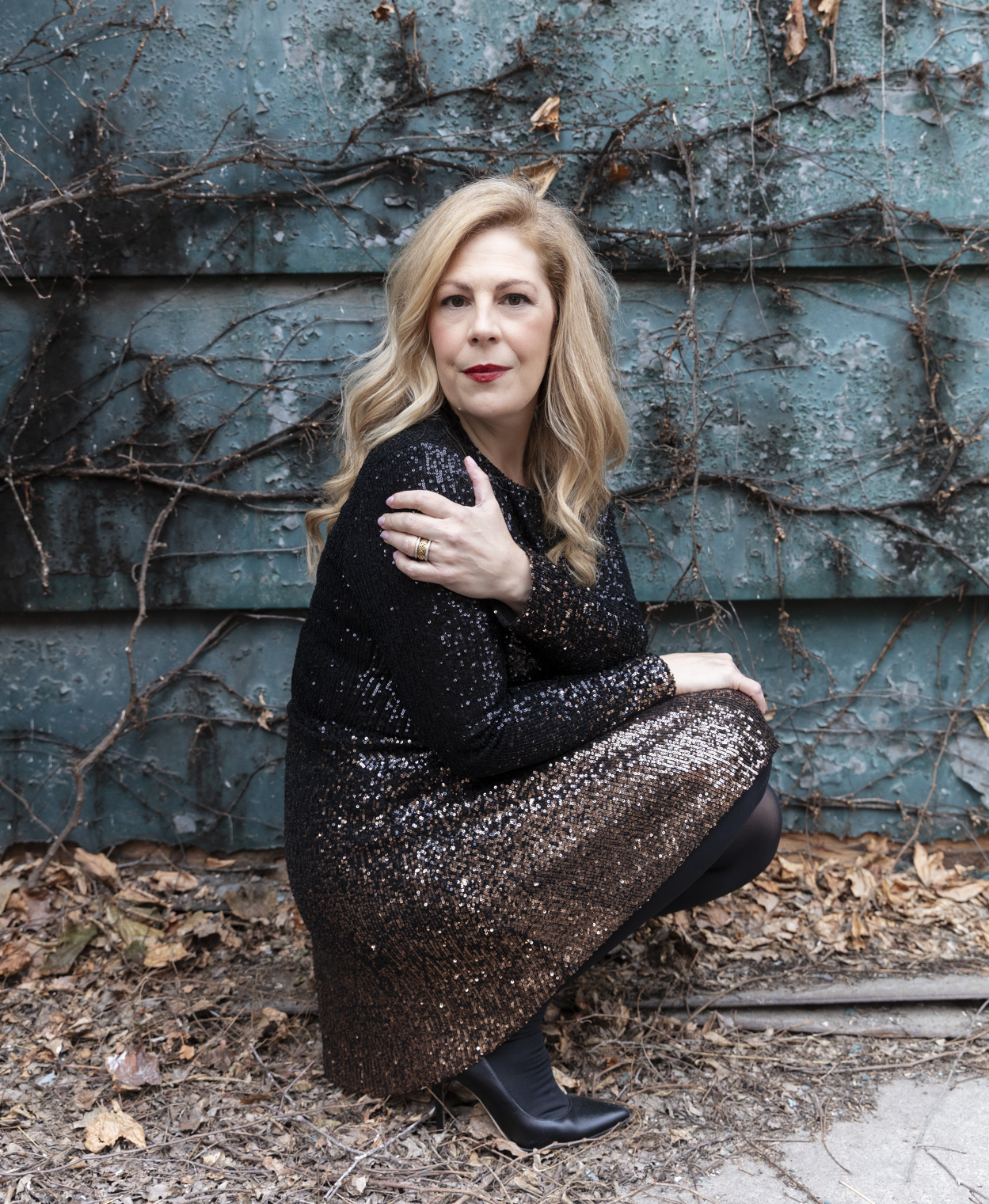
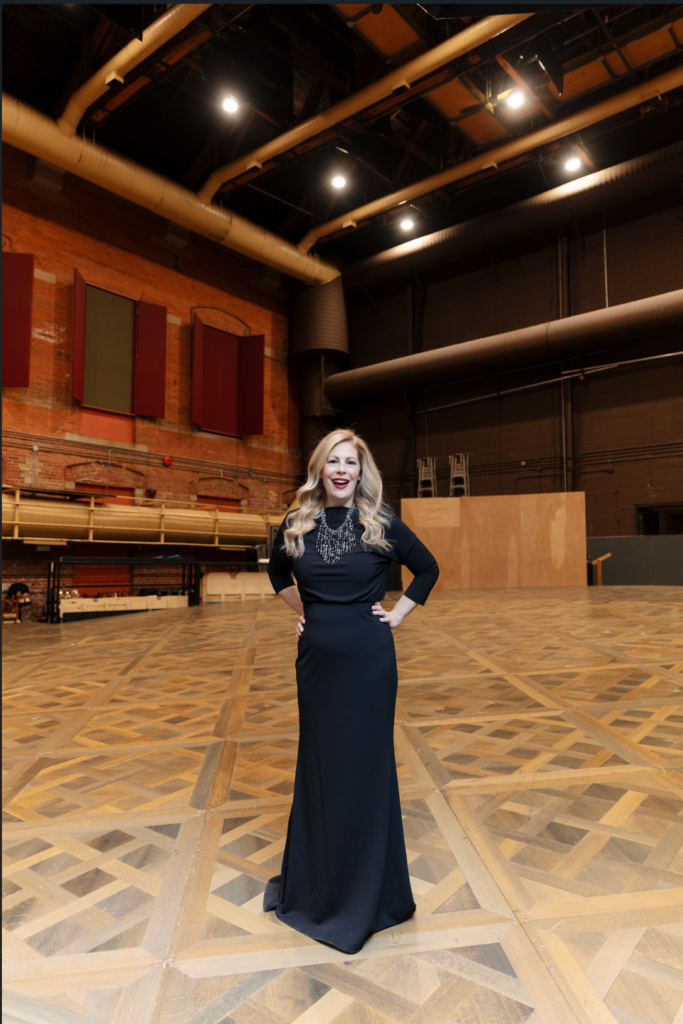
Between Sondra Radvanovsky and the French public, it’s a love affair! Aida, Il trovatore, Simon Boccanegra… The soprano continues to score successes on Parisian stages, and there is no doubt she will achieve another triumph in the upcoming performances of Tosca at the Opéra Bastille (March 31, April 3, 6, 9, 12 ).
Première Loge met her on the occasion of her visit to Paris, as well as for the release of her new album, entirely devoted to Puccini.
Stéphane LELIÈVRE – Your new Puccini album is a recording of a concert given in Chicago in February 2025, and most of your CDs come from concerts or live performances recorded in front of an audience. Do you feel that you give the very best of yourself on stage, in front of the public, rather than in front of a microphone?
Sondra RADVANOVSKY – I’ve always felt that the stage is where I give the most honest version of myself. When there’s an audience in the room, something shifts. The adrenaline, the shared breath between the orchestra, the singers, and the public… it creates a kind of electricity that you simply can’t manufacture in a studio.
In a recording studio you can aim for perfection, but on stage you’re aiming for truth. And sometimes truth is a little dangerous, a little unpredictable, and that’s what makes it exciting. I think that’s why so many of my recordings come from live performances. What you hear is a real moment in time. Nothing polished, nothing fixed. Just the music and the emotion as it happens.
Tosca, "Vissi d'arte" - Paris, Opéra Bastille, 2016 (dir. P. Jordan)
S.L. – This Puccini album allows you to explore almost all of the operas composed by Puccini—only Il tabarro from Il trittico is missing! Puccini will also feature prominently in your upcoming performances: you are currently in Paris for a series of performances of Tosca, you will sing Turandot in Munich next summer, and La fanciulla del West in New York this December… What does this composer represent for you? Passion? The perfect union of theatre and music?…
S.R. – Puccini, for me, represents the perfect marriage of theatre and music. He understood human emotion in a very direct, almost cinematic way. When you sing Puccini, you cannot hide behind beautiful sound alone. You have to live the character completely.
What I love is how he writes for the voice. The vocal line is incredibly generous, but it’s also demanding because it requires total emotional commitment. One moment you’re whispering something intimate, and the next you’re pouring out the deepest despair or passion.
For me, Puccini is passion, absolutely. But it’s also truth. His characters feel very human, very fragile, and that’s what makes them so powerful to portray.
S.L. – Minnie in La fanciulla del West will be a role debut for you, won’t it? What draws you to this character, musically or dramatically?
S.R. – Yes, Minnie will be a role debut for me, and I’m very excited about it. She’s such a fascinating character because she’s both incredibly strong and deeply vulnerable. She’s not the typical Puccini heroine who dies tragically at the end. Minnie fights. She survives.
Musically, the role is wonderful because Puccini writes these expansive lyrical lines but places them inside a very dramatic, almost cinematic score. Dramatically, she’s a woman who holds an entire community together, yet she carries her own loneliness and longing.
I love characters like that. They feel very real.
S.L. – Puccini is often associated with the verismo school (even if some musicologists question this classification). Yet in your Puccini interpretations, you seem to place great emphasis on approaching his music with an almost bel canto technique: respect for legato, great attention to the vocal line and to nuance, musical expressiveness perhaps even more than verbal expressiveness…
S.R. – For me, the foundation of singing Puccini is actually very close to bel canto. If you lose the legato, if you lose the line, the music becomes heavy and the emotion stops flowing. Puccini’s writing is incredibly expressive, but that expression must come through the voice in a natural way.
I always think first about the phrase, about the breath, about how the line moves from one note to the next. The drama is already in the music. If you sing the line with respect for the legato and the nuance, the emotion appears almost by itself.
So even though people often think of Puccini as Verismo, I approach it with the same technical discipline I would use for Bellini or Donizetti.
Norma, "Casta diva" - Paris, Opéra Bastille, 2016 (dir. P. Jordan)
S.L. – Speaking of bel canto, you are one of the few singers today who can, like Maria Callas in the past, move between the Bellini and Donizetti repertoire and later Italian works—late Verdi, Puccini, Giordano… How does one move from one type of repertoire to another? Does it require a particular discipline?
S.R. – Moving between these repertoires requires a great deal of discipline, but the core technique must always remain the same. The voice doesn’t know whether you’re singing Bellini or Puccini. What changes is the color, the style, the dramatic weight.
With bel canto, the focus is very much on purity of line, agility, and elegance of phrasing. When you move into later repertoire like Verdi or Puccini, the emotional intensity increases and the orchestration becomes richer. But if the technical foundation is solid, you can move between these worlds quite naturally.
For me, bel canto has always been the gymnasium for the voice. It keeps the instrument flexible and honest.
S.L. – The French public is especially fond of you, and you have enjoyed great success at the Opéra in several Verdi roles: Hélène, Leonora, Elisabetta, Amelia, Aida… Is there another role you would like to sing in Paris? Perhaps Cherubini’s Médée, which was premiered in Paris at the Théâtre Feydeau in 1797?
S.R. – Paris has always held a very special place in my heart. The audiences there listen in such a thoughtful and passionate way, and I’ve been very fortunate to sing some extraordinary Verdi roles at the Opéra.
Of course, Médée would be fascinating. It’s such a powerful role, both musically and dramatically. She’s a character of immense intensity, and that kind of psychological depth is always very appealing to me as an artist.
So yes, if Paris ever decided to invite me to sing Médée, I would certainly be very intrigued.
S.L. – We were very disappointed when Bellini’s Il pirata, which you were scheduled to perform in concert in 2021, was cancelled due to a strike… Would you like to be offered another opportunity to sing this work? You were only able to take part in the rehearsal…
S.R. – Yes, I remember that cancellation very well, and it was such a disappointment. Il pirata is a magnificent work, and Bellini wrote some truly extraordinary music for the soprano. We had already begun rehearsals, so we were able to explore the score together, but of course the most important part, the performance itself, never happened.
I would absolutely love to have another opportunity to sing it. It’s a role that requires both vocal freedom and deep dramatic commitment, which is exactly the kind of challenge I enjoy.
So if the chance ever comes again, I would say yes without hesitation.
S.L. – Welcome to Paris, dear Sondra, and wishing you every success with Tosca!
——————————————————-
Pour lire cette interview dans sa version française, cliquez sur le drapeau !



1 commentaire
[…] Première Loge […]