RENÉ BARBERA: “No matter what the costumes or sets look like, the themes explored in La traviata are part of the universal human experience.”
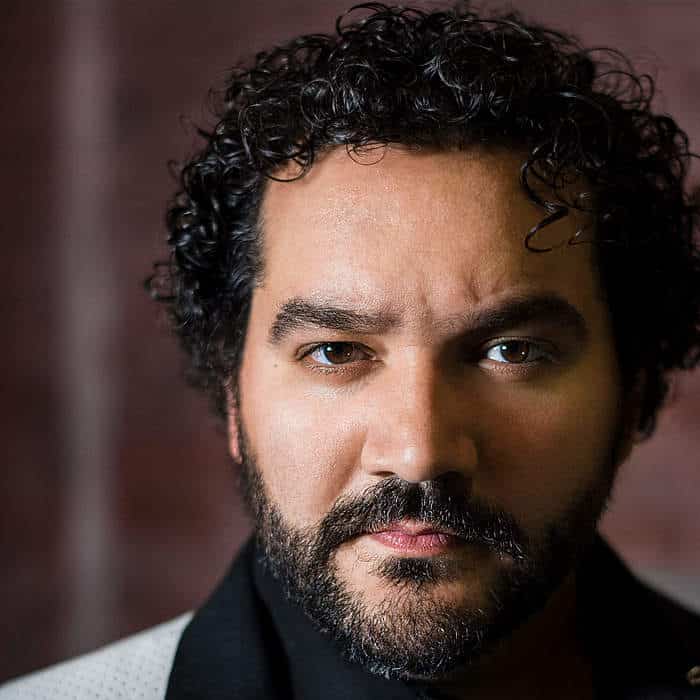
Back in Paris this month, tenor René Barbera returns to the Opéra Bastille and La Traviata in a production with which he is already well acquainted, having delivered an Alfredo in 2024 that Première Loge greatly admired. Ahead of this latest series of performances, he sat down with Stéphane Lelievre and Andrei Krupennikov. He reflects on his interpretation of Alfredo, discusses how stage direction shapes his portrayal of a character, and shares insights into his upcoming projects and his wish to further explore the French operatic repertoire.
Andrei KRUPENNIKOV : Do you have a particularly memorable memory or experience connected with La traviata during your career?
René BARBERA : I think everybody remembers their first time performing it so that’s an obvious choice but the one that stands out to me was a jump in at La Scala. I remember receiving a phone call directly from the administration in Milan asking if I could sing Traviata there the next day. I was free to do it and I went but woke up with a strained neck and had to do the show without turning my head. Alongside Leo Nucci and Marina Rebeka. Memorable day all around.
A. K. : Alfredo is often seen as impulsive and naïve. How do you relate to this character, and how do you bring nuance to him? What is yourAlfredo like?
R. B. : Well I think we have all been like Alfredo at some point in one lives. I try my best to show his gentler more timid side at the beginning. Which he is quite timid at first. I see him a little like Nemorino if he as just a bit more suave. In fact, if you look at the duet « una parola o Adina » between Nemorino and Adina – you’ll notice the overall feeling is quite the same. Alfredo professing his love and Violetta saying – the most you’ll get out of me is friendship because I’m free and effectively she doesn’t believe in love.
The big difference is his words actually touch her and she comes around much quicker. After that of course I just go forward recalling how the great loves and great heartbreaks of my life left me feeling and channel those emotions and memories into the show as best I can.
A. K. : Is there a passage in the score that you especially fear or, on the contrary, most look forward to performing?
R. B. : I’m always, as I think every tenor is, a bit looking at the rage scene and considering their pacing to not get too crazy with it. It’s hard to express all of that pain and blind rage without letting in creep into the throat and cause you to push or over-sing. That said it absolutely one of my favorite moments in the opera – especially when he realizes what he’s done and you watch him process instant remorse.
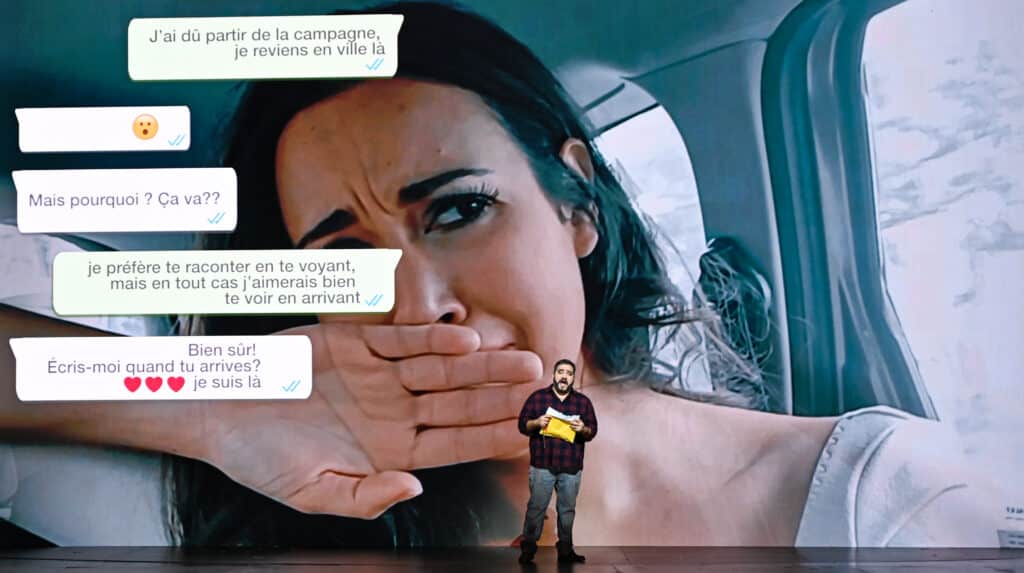
Stéphane LELIÈVRE : You are already familiar with Simon Stone’s production, in which you performed in 2024. Is it difficult for you to embrace a contemporary reinterpretation of a greatclassic? More generally, do the sets and costumes of a production influence the way you embody yourcharacters?
R. B. : I think the only part of the show that, for me, was ever challenging for the character is the very end… I was so used to always being close and still for her final moments that not getting to do that and not getting to hold Violetta was a challenge. However, I really found that it works still once you just go for it and try to continue to experience the moment.
As far as sets and costumes I think it is always a touchy subject and one best to go into open minded. Sometimes modern productions and reinterpretations fail and sometimes they really discover another possibility. I try not to let those things influence my character and the text because the truth is the underlying story doesn’t change. It’s about relationships, love both familial and romantic, heartbreak both familial and romantic, passion, growth, the pain of seeing a loved one slowly fade away, the remorse of saying something in the heat of a moment you’ll always regret, forgiveness, reunion, and ultimately death and grief. The overarching themes of this piece are about things every human who spends any significant amount of time on this earth endures. It’s all there.
It doesn’t matter what the costumes or the set looks like – these themes are everlasting and ones we will experience until the end of time. It is a timeless story if we just open our minds and hearts to feeling the real story without letting the visuals distract from the parts that actually matter.
S. L. : You will once again be performing at the Bastille Opera House, a vast venue that you know well, having sungthere several times since I puritani in 2013. How does the specific nature of a theatre — especially its size — affect the way you act or sing?
R. B. : I did my operatic growing up, so to speak, in American opera houses which are massive so I’m quite accustomed to larger theaters. I do my best not to let the size of a venue affect how I sing. In theory the acting should be a bit bigger but I admit that I am not good necessarily at making those adjustments. I have always preferred to be more natural than artificially large in my gestures and motions.
https://www.youtube.com/watch?v=Fjj4KQTETHc
L’elisir d’amore, « une furtiva lagrima » – Orange, Musiques en fête, Orchestre de chambre de Cannes, dir. Didier Benetti
S. L. : You are known as a specialist of the Italian repertoire, but you have also performed in Les Troyens, La Fille du régiment, or Les Contes d’Hoffmann. Are there any other French roles you would be interested in performing?
R. B. : So I haven’t yet sung Les Contes d’Hoffmann (I will be singing it this fall in Argentina) but I HAVE sung Guillaume Tell a couple of years ago. I am VERY much interested in performing a significant amount of French repertoire! I cannot say where and when yet but there is already a Damnation de Faust in my future seasons and of course I dream to someday sing Werther, Faust, Manon, Romeo et Juliette, and maybe even Les Troyens (much further in the future) as Énée instea of Iopas which is the character I performed in that opera before. I’m open to whatever people want to hear me sing as long as it is safe for my voice and feels appropriate.
Pour lire cette interview en français, cliquez sur le drapeau !