Alasdair Kent : « The best advice for a singer is probably to follow Maria Callas’s approach: to treat the voice as an instrument ».
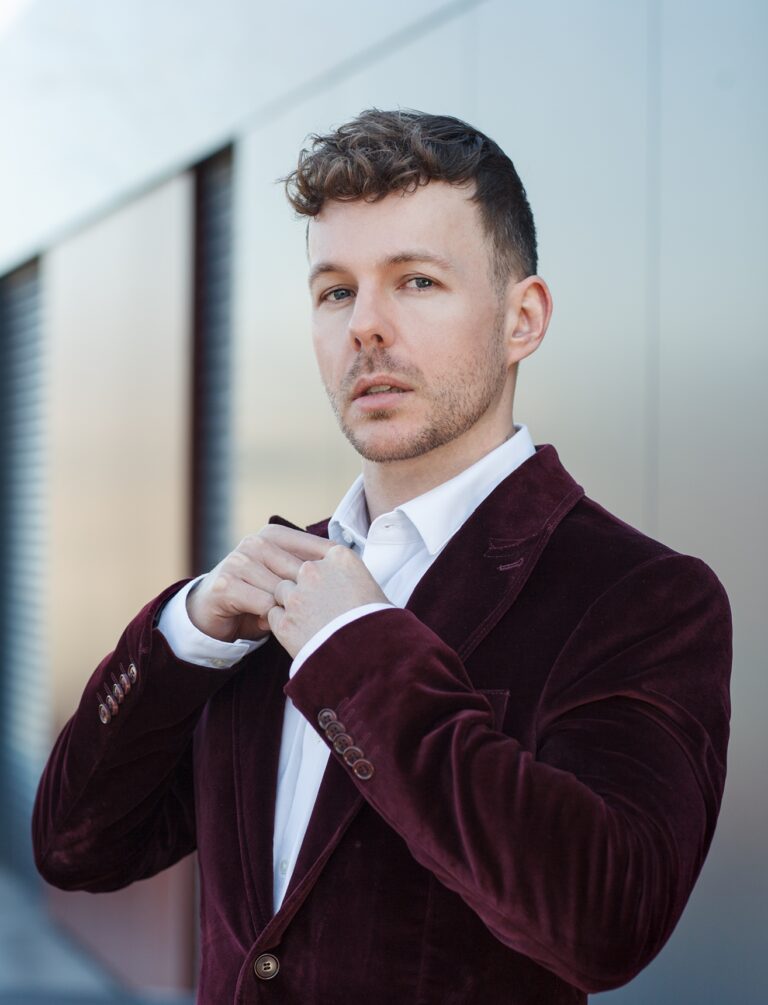
We first met the young tenor Alasdair Kent several years ago, on the occasion of a delightful production of Il matrimonio segreto by Domenico Cimarosa at the Festival della Valle d’Itria in Martina Franca in 2019. Since then, we have had several opportunities to appreciate his talent in Baroque, Mozartian, and bel canto repertoire. Currently appearing in Ercole amante at the Opéra Bastille, Alasdair Kent kindly granted us an interview in which he reflects on his career, his approach to this rare work by Antonia Bembo, and more broadly on the profession of opera singing today.
https://www.youtube.com/watch?v=-KcwS2LHdVE
ERCOLE AMANTE d’Antonia Bembo (Ana Vieira Leite & Alasdair Kent) – Opéra de Paris
Entering a rare work…
Stéphane LELIÈVRE : What led you to accept being part of this Ercole amante production? Had you heard of Antonia Bembo before this project?
Alasdair KENT : I had not – I doubt that many people have at all. I’ve worked with Leonardo and with Cappella Mediterranea before, I know the quality of the music-making and I’m thrilled to be involved with them again, so their attachment to the project was already interesting. This is my debut at the Opéra national de Paris, and it’s of course interesting to be involved in a new production at a major opera company. The writing of this particular role, Hyllo, was interesting to me from the first glance. It’s extraordinarily high, almost impossibly high. But this is what I do, this is where my voice sounds at its best. A high tessitura – if the role is written well – is my friend. I knew this was something for me.
S. L. : What does it feel like to take part in the “rebirth” of such a rare work? Is it more exciting — or more intimidating — than performing a standard repertory opera?
A. K. : Both. It’s exciting, and especially in this case where we are not only resurrecting but also reinventing the score. Of course, the music needs to be orchestrated, we also need to make artistic decisions for the first time with no other benchmarks. For instance, the cadenza to my aria in Act IV, it is our inclusion, but it fits perfectly, with the music, the style and the character. It’s an intense moment for the character, and I’ve matched that with a diminuendo on a high-C to a pianissimo. Some people might look at this and think it’s just a gimmick, or a technical trick. It is both of those, but it’s also much more – it’s a musical and melodic expression of the character. It is my strongly held belief that the roots of bel canto singing that we know from Rossini and Bellini in the earliest part of the 19th Century, these roots lie back as early as Caccini’s Le nuove musiche, from 1602. So, I’m taking part of my experience in later music and finding an earlier expression of it. It’s also intimidating because… learning a new score, by a composer one has not sung before, it’s not just new notes, new pitches and rhythms, new words to learn, master and memorise. It’s a new musical language, new harmonies, new… everything. We all felt this during the rehearsal process, a large part of the early rehearsal process was simply grappling with the score and its musical specificities.
S. L. : Who is Hyllo to you? How would you describe his place within the opera’s family and romantic tensions? What makes him feel modern or close to us today?
A. K. : There’s an interesting dimension to Hyllo that is very modern. Hyllo is the son of Hercules. How can it be easy for a young man growing up in the shadow of a father who is one of the world’s greatest heroes, a demigod? And, indeed, in this opera, we see the negative repercussions of Hercules’ descent into decadence and iniquity. Hyllo is rejected and even derided by his father. There’s a certain through-line of coming-of-age for Hyllo that culminates in his father’s death and his marriage to Iole, in which he’s seeing an old world dying and a new world being born. It is in a way quite modern. So, while he does fit the mold of the young lover, despairing at having lost his beloved, there are some more colours, more dimensions here.
S. L. : What is particularly demanding about Baroque singing for a tenor today? Does Baroque repertoire require a different relationship to the body and to breath than Mozart or bel canto?
A. K. : Yes and no. Singing is singing, and good singing, frankly, is appreciated whether it’s in Baroque, Mozart, bel canto, Verdi, Wagner, or George Benjamin. Personally, I think we’re living in an extremely… to use a word I just used to describe Hercules, decadent time in vocal history. Large, loud singing is lauded, even when that comes at the expense of musical accuracy, of refinement of expression, of stylistic integrity, of vocal health. I will say that “Baroque repertoire” – though this is a colossal field of pieces that really can’t be reduced down to just these two words – is inherently more intimate, more musically precise, more technically demanding, and more about a contrast of colours than the great canon of late-Romantic pieces that are now commonly performed. Of course Baroque music can be loud, can be sung by large voices, absolutely. But this is not required, and nor can it supplant what is truly needed in this music. The same is absolutely true in bel canto, though bel canto is closer to the lyric tradition we perform these days, so sometimes the differentiation is not so stark. In terms of the relationship to the body or breath, no, good singing is good singing and it’s required whether you’re singing something from 1707, 1807, 1907 or 2007. But Baroque music does usually demand some proficiency in coloratura singing, which many singers these days baldly lack. I would say the biggest differences are in the kind of expression. For example, many singers who sing Baroque music are lambasted for their use of straight-tone. I’m a firm believer that a vibrant voice is a healthy voice, but in Baroque music, where dissonance is so extremely expressive, it’s useful and stylistically appropriate to be able to use some straight-tone to highlight that dissonance as an expressive device. Now specifically on the topic of the tenor voice, well, tenor singing has changed drastically from the Baroque period to today, for many reasons, including some specific performances that happened in Bologna in 1831. If you follow me on Instagram, you might have seen what I mean! (Here is a ‘History of the Tenor Voice’ by Alasdair Kent!)
S. L. : What does Leonardo García Alarcón bring to the way you approach and sing this music?
A. K. : Leonardo cares about musical accuracy, but not at the expense of expression, of living drama, of creating a character who sings glorious but also means every word he says. This is my ideal kind of singing – high notes and trills are all well and good, but if it’s just meaningless beauty then… who really cares? – so I enjoy immensely collaborating with Leonardo. I do think Leonardo has a genius for this kind of repertoire, and I find him immensely inspiring.
Your career and its evolution
S. L. : When did you first feel that singing could become a career rather than simply a passion?
A. K. : I’m honestly still constantly surprised by this, and in a way waiting for it to all come tumbling down. I’ve been told that no less than Renée Fleming felt the same, I don’t know if that’s true, so I at least feel in very honoured company! I know, they call this imposter syndrome, but… I’m really just so pleasantly surprised and overjoyed to do what I do. It’s an incredibly tough field, and certainly not commensurately rewarded to be frank, but I still cannot imagine myself not doing this.
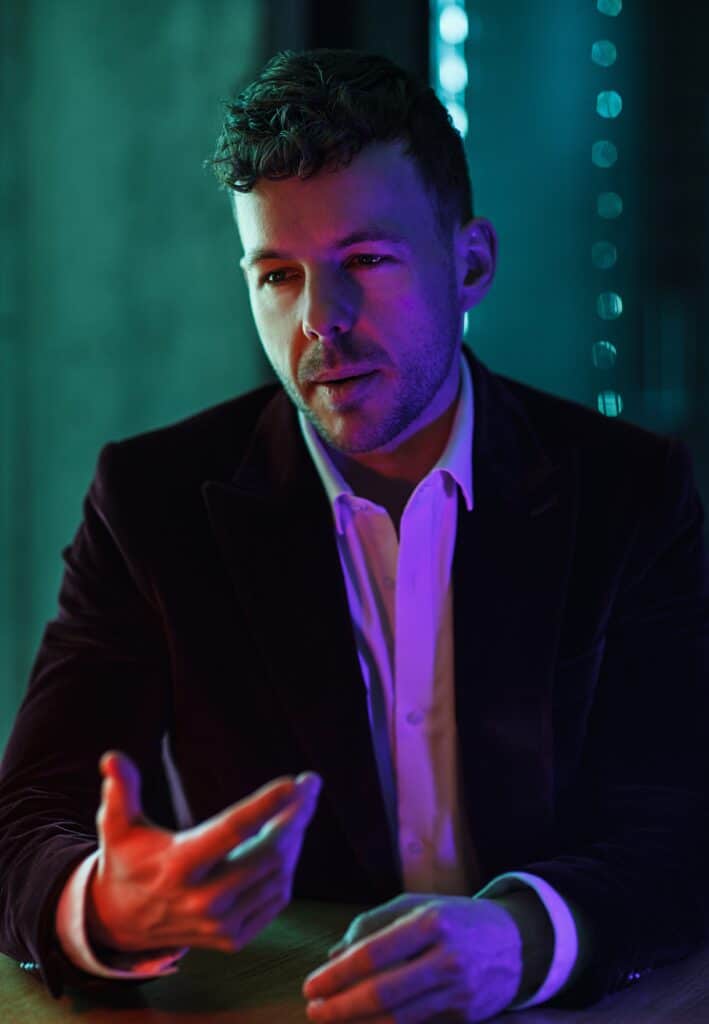
A. K. : I think my surprise is also because… I’m not in this for the career goals. Of course, I want to make music at the highest level, which necessarily means working in the best houses and with the best colleagues, but my motivations are vocal and musical more than they are career, success or self-aggrandizement. I have nothing to prove beyond singing this music the way I think it should be sung.
S. L. : How does one choose those first roles, and build a career without moving too fast? Is it sometimes frustrating to have to wait before taking on certain roles vocally?
A. K. : This would have been a much more interesting question in years gone by when there was more control by the singer, more investment by the theatres, and more ability to say no. Times are tough. Sometimes, in order to sing, you accept what you are offered. I have been immensely fortunate here, in my opinion, that I have not had to do anything egregiously wrong for my voice. It is also true that sometimes you learn your limits by transgressing them, and sometimes you expand your limits by stretching them, so… every singer has to make their own choices here. I add new roles when the chance appears, I know most of what I can and cannot do and most of what I want to do! In recent years, as I’ve started singing in major theatres and been asked to do more things, I’ve made a lot of role debuts. In the last three or so years, it’s something like 23, 24 role debuts that I’ve made. That is objectively too many. But as a result I’ve had some immensely beautiful experiences. There’ve been long stretches where my family hasn’t been sure whether I’m alive or dead, and it’s taken an immense toll on my personal life, but that’s just life. One makes one’s choices.
My first roles, major roles, were also very accessible to me, maybe by luck, maybe by design. I went on as a cover for LA CENERENTOLA when I was 26, six months later I sang my first COSÌ FAN TUTTE, BARBIERE six months after that, L’ITALIANA IN ALGERI three months after that. I was studying in the United States and went to a great school, the Academy of Vocal Arts in Philadelphia, where the students sing leading roles in full productions with orchestra. I knew for my voice, as specific as it was and is, that a normal fest or young artist program was useless to me – covering Alfredo in LA TRAVIATA would be an absolutely useless assignment for me, as a high tenor. For me, it’s not frustrating at all, I could sing LA CENERENTOLA & COSÌ FAN TUTTE until I die and be fairly content. The greater pinnacles of my repertoire are I PURITANI, which I’ve already sung, or other things like LA SONNAMBULA or LAKMÉ, which I would love to do. For me, the achievement will be singing these same roles for the next 15 years, rather than moving in to a repertoire that, for me, would just be false. I look at someone like Lawrence Brownlee as an absolute model in this: he’s been singing LA CENERENTOLA for 25 years and can still mop the floor with any of us. This is what good singing looks like.
S. L. : Do you already feel your voice evolving from year to year?
A. K. : My voice has not changed dramatically in the last decade, except to say that my technical and expressive capabilities have grown immensely. The instrument is not necessarily bigger, darker, or louder, it is just simply more fully what it is. I, myself, know my capabilities much better. My voice changes depending on what I’m singing, become higher and more supple with that kind of repertoire, or more centred in the middle with that kind of repertoire. But it’s important to maintain… control. The technical work is keeping the capacity to sing all kinds of things, regardless of whatever repertoire-food I’m feeding my voice at the moment.
S. L. : Your repertoire today is largely focused on Rossini, Classical and Baroque works. Do you see yourself gradually expanding into later 19th-century repertoire in the future?
A. K. : In a very modest way, yes. I see a pathway to a high-lyric French romantic music that’s possible for a singer like me – I sing Roméo for the first time next season in Australia. This lyric French music, in many but not all cases, requires a tenor with a unique skill, and that is dynamic flexibility above the stave. The ability to sing high and soft, sometimes extremely high and extremely soft. In French music, it’s borne out of the tradition of haute-contre tenors who sang the works of Lully and Rameau. It’s something that’s central to the French musical tradition. So some Gounod (Roméo yes, Faust maybe not), some Bizet (Nadir yes, Don José maybe not), some Massenet (Des Grieux, maybe, Werther, maybe not) etc., these things, yes. Rossini and Bellini are the best composers for me now from the Italian tradition, but some Donizetti is possible too. Probably not much Verdi. Of the German repertoire, there’s some limited pieces for high tenor by Richard Strauss, I would kill a man to sing DIE SCHWEIGSAME FRAU for instance, but outside of Mozart, it’s rare. I would like to sing some operetta, however.
https://www.youtube.com/watch?v=fpEvaNkfbaA
Alasdair Kent – « Languir per una bella » L’ITALIANA IN ALGERI (Rossini) 2017
The daily life of a singer
S. L. : What does a typical day during rehearsals at Bastille look like for you?
A. K. : There’s no typical day! It depends on what task needs to be accomplished. A dress rehearsal with orchestra looks very different to an early staging rehearsal. But otherwise, we’re normal workers, we have a schedule, we have breaks. It’s usually two blocks of three hours, with potentially a few extra commitments, and a lot of work outside of rehearsal time too of course! I’m sorry to say that, on paper, it’s not too interesting. Which is a little strange, because actually, rehearsals can sometimes be more interesting than performances. Discovery, early collaborations, being given a red-hot idea by a colleague or a director, it can be very eye-opening. I will say, a typical day at the Bastille usually involves a lot of walking around the building – it’s huge. The area backstage is absolutely colossal, which of course is required to mount the fantastic, large-scale productions that are done here.
S. L. : You are very active on social media, and your Instagram mixes humour, educational content, and backstage moments: how did that idea come about? Is it important for you to talk about opera in a different way? Do you feel social media can genuinely help renew opera audiences?
A. K. : I view social media as… kind of adjunct to what I do. It’s important to be seen to be active, and it’s important to tell my story. I do like the fun side of it: opera can be very serious, and despite taking my job very seriously, I don’t take myself seriously at all. I’m a latecomer to social media, I’ve only been seriously engaging with Instagram for about three years now. I do work with someone for social media, and we brainstorm and execute things together. It’s increasingly important to me that this is authentic to me. Also, as it’s no longer possible to make many large scale recordings, disseminating my singing on social media is at least one way to engage with more people, more often. On renewing audiences… I think the best thing we can do here is make great opera. That and fight to reorganise our societies into more socio-economically fair ones. Prosperous people are happy, want to go out, want to see new things, want to go to performances, and want to increase their experiences, educate themselves. This will naturally lead people who could enjoy opera to finding it and engaging with it.
And finally, just for fun!…
S. L. : Which role could you sing every night?
A. K. : None. I need a break. At least one night, preferably two nights between performances is required. If I had to pick only one opera to sing for the rest of my career though… no, that’s actually too hard. If I sing too much Rossini one season, I miss Mozart. Sorry, I don’t have an answer here!
S. L. : Which composer would you take with you to a desert island?
A. K. : At the moment… Rachmaninov.
S. L. : What is the best piece of advice you’ve ever been given?
A. K. : My great talent is ignoring advice and doing it my own way. I think things sometimes take me longer because of this, but I somehow still seem to end up exactly where I need to be, and I’ve never had to pretend to be someone else other than who I am along the way. That said, the best piece of advice for singers is Callas’ approach – treat your voice as an instrument. If the composer writes these scales, trills, quick notes, and if you can’t do them, how can you put yourself in front of an audience?
S. L. : What was the first opera that truly moved you?
A. K. : NORMA. “Casta diva.” I heard it when I was ten, and it took me almost a decade to figure out 1) that it was opera, and 2) which opera it was.
S. L. : Complete silence before going on stage… or a relaxed atmosphere backstage?
A. K. : I like to sing or hum a little bit just before I go on so I’m not starting cold. But my approach is very relaxed. I sing the most difficult music ever written: I need to have fun, otherwise the job is too hard.
Pour lire cette interview dans sa version française, cliquez sur le drapeau !