“Première Loge” welcomes Lenski and Olga! – An Interview with Marvic Monreal and Bogdan Volkov
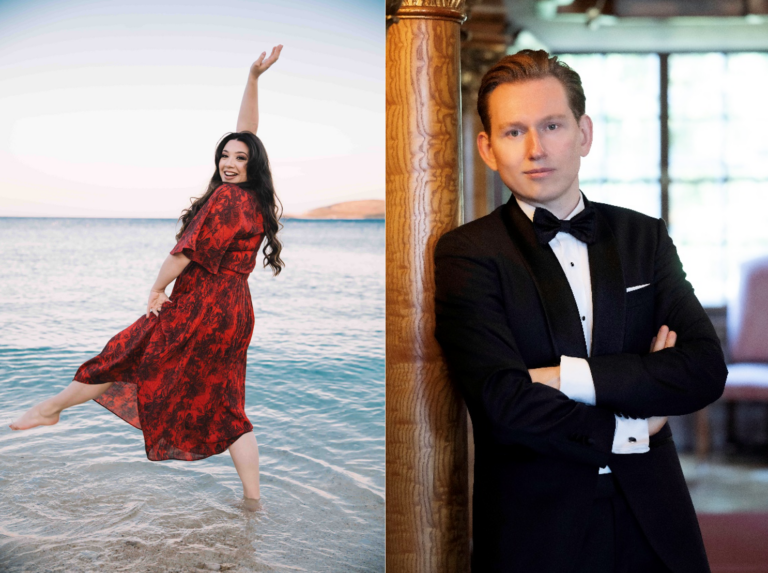
Following the Paris performances of Eugene Onegin, Première Loge met with the singers playing Olga and Lenski : Bogdan Volkov and Marvic Monreal, two brilliant representatives of the younger generation of opera singers.
Stéphane LELIÈVRE – You have both just made your debuts at the Paris Opera — at the Opéra Bastille and the Palais Garnier for Marvic, and at the Palais Garnier for Bogdan. How did you experience these first appearances on such emblematic stages in France? And how did the performances of Eugene Oneguin, which were very warmly received by the audience, go for you?
Marvic MONREAL : My first time working in Paris was a wonderful time. I was here for 5 whole months.
Singing at Bastille of course has a very different feeling than when singing at Garnier. Wagner at Bastille is very well suited whereas Onegin was perfect and more intimate for Garnier. I felt very welcomed by the Parisian audiences, backstage crew, all the team behind the scenes were fantastic and very supportive to the artists.
Bogdan VOLKOV : I am very happy to make my debut in Paris, on a stage where many legendary artists who have inspired me throughout my life have performed. The audience was very responsive and warm. At every performance one could feel their attentive listening and sensitivity, and for me this was an extremely valuable experience.
S.L. : – In addition to the Paris Opera, you have already performed on several very prestigious international stages, even though your careers are still quite recent: La Monnaie in Brussels for both of you; the Royal Opera House in London, the Berlin Philharmonie and the Maggio Musicale Fiorentino for Marvic; and the Salzburg Festival and the Vienna State Opera for Bogdan.
How do you experience such a rapid rise? It must be incredibly exciting, but perhaps also a little overwhelming to be exposed on such major stages so early in your careers.
M.M. – You definitely feel more of a sense of responsibility when you sing in venues/opera houses of the level you mentioned above. Even though we always want to deliver our best, irrelevant where the venue is.
I guess along the years you find ways how to deal with nerves, preparation is always key and as you go along you learn ways how to help yourself, how to regulate your nervous system etc..
As long as you feel safe vocally in your repertoire, I have always felt that stepping on these stages came at the right time, that is, when I was ready for it, not before.
B.V. – I have been involved in music for about 30 years. I started when I was six years old and always knew that I wanted to connect my life with music, singing and performing. My professional career in opera began in 2013, and although this is not such a long period of time, it is still a milestone where one can draw some first conclusions. I have had the honour of performing in many of the major opera houses, and the Paris Opera has become a new and very exciting discovery for me. I am especially happy that I made my debut there in one of my favourite roles.
Of course, we always work a lot in preparation for a production so that on stage we can feel free and confident. But every time I approach the opera house, I feel a sense of admiration and anticipation for what will happen that evening. It is a source of endless inspiration.
S.L. : – For both of you: were there particularly important figures in your training? And in your opinion, what makes a good voice teacher ?
M.M. – There were many people that left an impact, you kind of learn something and take what works for you from different people. My training at the Young Singers Project in Salzburg was very crucial for me, as was my training at the Solti Accademia and my time at the studio in Frankfurt Opera. Brigitte Fassbaender, Hedwig Faßbender come to mind. Of course there are and were others.
A good voice teacher is the one that understands how your brain works as much as they understand your voice and has different ways and methods to explain because one method does not fit for everyone. So it’s crucial to have more than one way to achieve the same result.
B.V. – I have had many vocal teachers, and I have been incredibly lucky with all of them. No one ever tried to change my voice or push me into a different vocal category. I think what makes a good teacher is the ability to recognise a singer’s natural repertoire and guide them carefully in that direction. It is also very important to understand the singer psychologically. But it is always a mutual process: a teacher can give a lot, but the singer must be on the same wavelength.
S.L. – After your studies, like many young singers, you both went through programmes designed to support young artists at the beginning of their careers: the National Opera Studio in London or the Opera Studio in Frankfurt for Marvic, and the Young Artists Programme of the Bolshoi Theatre in Moscow for Bogdan. In these programmes, singers gradually become familiar with the profession: they may cover established artists, sing smaller roles, and observe major productions from the inside. In what way were these experiences formative for you? What did they bring you in practical terms?
M.M. – In a studio you usually get to learn how to jump from one production to the other, how to be fast with learning the staging, memorizing music, adapting to different rooms and casts… sometimes at the last minute. All these things mostly build character … It does push you to the limits, which can sometimes be dangerous but it also gives you confidence in yourself for when you actually start working. You know that you already experienced that kind of situation. Therefore, you have more tools on how to handle certain situations.
B.V. – It was an extremely valuable experience. In addition to vocal training, I had the opportunity to work with language and diction coaches, specialists in phonetics, stage movement teachers, and various coaches and singers from all over the world. I also had the chance to perform on stage in opera productions.
Already in the first year we had tours, and my first trip was to France, to Avignon, where I sang Lensky’s aria in a concert. Later we also performed in Nice and Lille. Then in 2015, at the Paris Opera Competition, I sang Lensky again and received the Grand Prix and the Audience Prize. So my connection with France began quite early, and I immediately felt very fond of the country. The Young Artists Programme gave me this first encounter and this important experience.
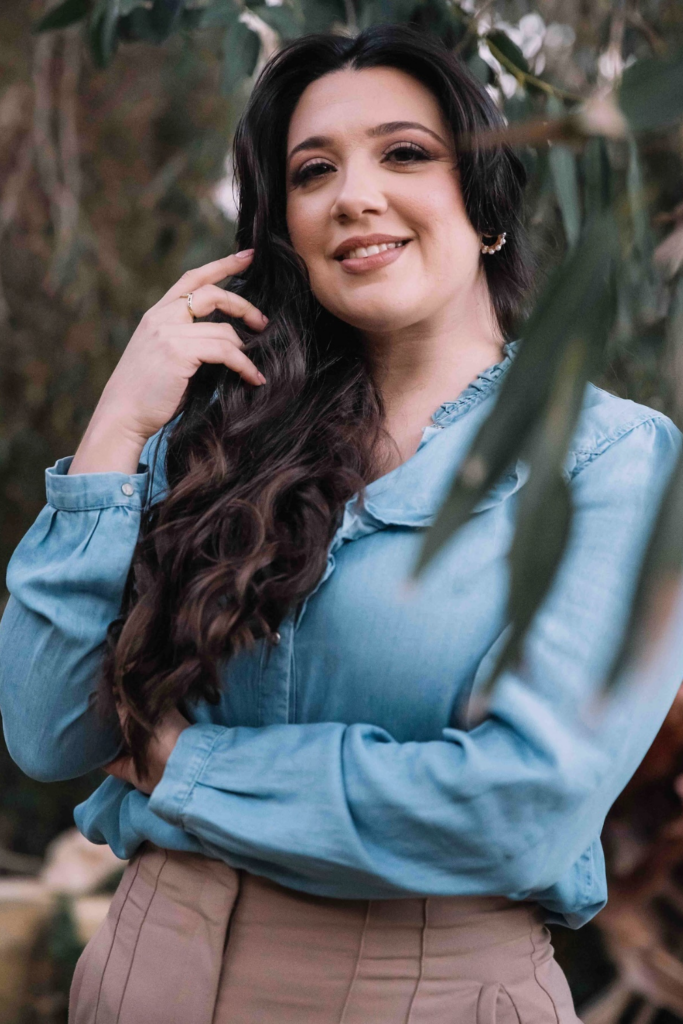
S.L. – Marvic, you are originally from Malta, even though you studied in London. How did your vocation for singing begin? Is there an important musical or operatic tradition in Malta? Is it possible to receive training there to become an opera singer?
M.M. – I have always took part in musicals and sang in the church at home. In Malta 70 years ago opera was a big thing, we are very close to Italy so my grandparents knew basically all the Italian repertoire by heart. Later we have lost this tradition, and unfortunately till nowadays we still do not have a professional music conservatoire. Things are improving now, there is more access and music is being taken more seriously in schools and colleges.
I have grown up watching the Malta Philharmonic Orchestra playing and I had my debut with them at a relevantly young age. I used to study voice privately with my teacher in Malta and in the mean time I did my degree in Tourism Studies.
At the age of 22 my teacher suggested I audition for music colleges in the UK, and that is where I commenced my masters at the Royal Academy of Music in London. As a child I never would have assumed that this is going to be my life.
S.L. – So far, you have performed a very wide variety of roles, both in the French repertoire — Werther, Carmen, Orphée aux enfers — and in the Italian repertoire, such as Lucia di Lammermoor, Rigoletto or Madama Butterfly, but also in Russian and German works. Would you like to maintain this diversity of repertoire, or do you see yourself specializing in a particular style in the future?
M.M. – I would love to keep the diversity, I am fortunate to have a flexible voice that suits different languages and styles of music. It’s only a question of what roles you’re singing, time wise to match your development, physically, mentally and I would say emotionally too.
The style is of course different and you need to have the knowledge of this and be flexible to change it according to the repertoire, but once you learn this, the technique remains the same. I will always try to balance my Wagner roles with my Verdi ones. My belief is that, changing different repertoire keeps the voice fresher.
S.L. – You have just performed the role of Olga in Eugene Onegin. I believe you do not speak Russian. How do you work on a role in a language that is not your own? How do you manage to memorise not only the musical score, but also the text and all its nuances?
M.M. – I do my phonetics and translation in Maltese. It helps me connect faster to my memory.
Maltese is a Semitic language so it has nothing to do with Russian but in our alphabet we have almost all the sounds that you need for the Russian language, which is why I find it easy to pronounce the Russian sound. My voice colour happens to fit with the sound too.
With learning and memorizing the meaning, it’s a game of translation, patience and repetition. Of course I was lucky to have all my colleagues that are fluent in Russian, it does help a lot. We also had enough rehearsal time to really work on each phrase and what we want to deliver with it.
S.L. – You, Bogdan, are originally from Ukraine and you were also trained at the Bolshoi Theatre in Moscow. For you, the Russian language is naturally more familiar, and you very often perform the role of Lensky, which seems to be becoming one of your signature roles. You have also recently had great success in Iolanta in Rouen. However, your repertoire also includes Mozart and certain Italian roles. I also noticed in your biography the Chevalier de la Force in Dialogues des Carmélites. Your voice seems particularly well suited to the French repertoire, especially opera-comique. Is this a repertoire you would like to explore further?
B.V. – I am a lyric tenor, and most often I would say that I perform Mozart operas, as well as sometimes music from the 20th and 21st centuries, so my repertoire is quite broad. Unfortunately, so far I have not performed many French operas, but I would very much like to. It is definitely something I hope to explore more in the future.
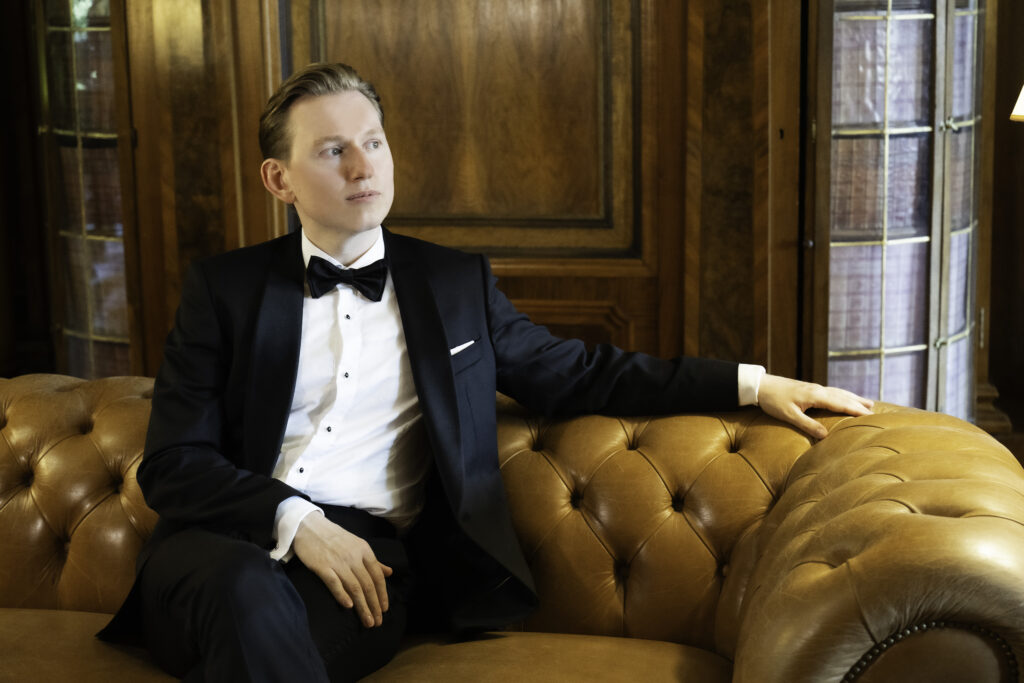
S.L. – Your performance of Lensky’s aria deeply moved the audience. You yourself seemed very moved while singing that scene. But is it possible to feel such emotion on stage and still maintain full vocal control? Do singers need to keep a certain distance from their emotions?
B.V. – Control is always necessary. But if you feel technically secure, there comes a moment when you can trust your intuition. Then technique and emotion become one natural whole.
S.L. – After the wonderful success you have just enjoyed in Paris, would you like to return to perform in France? Do you already have any projects here?
M.M. – Yes, I will be very happy to be back and I will be coming back to Paris Opera in the coming season. We would have to wait a little bit more for the season announcement hehe
B.V. – Of course I would love to return, and I look forward to it very much. Unfortunately, it will not be in the immediate future, because opera schedules are planned several years in advance. But I truly look forward to coming back.
S.L. – And finally: more generally, what are your plans for the coming months or years?
M.M. – This year I am finalizing my first home in Malta, it is something long time coming, in our world where we are constantly travelling it is very important to have a safe space where we can rest and charge our batteries for the next project, while preparing my first Nicklaus/The Muse in Hoffmann, and Varvara in Katya Kabanova.
I soon go to Firenze for my first Beethoven Missa Solemnis.
Above all, to stay healthy, happy, I will always be in search for balance in my life, sing and share music with my colleagues to our audiences. The world needs it.
B.V. – I can only share the plans for this season that have already been officially announced by the theatres. As for the plans for the coming years, they will become known once the theatres make their announcements.
——————————————————————–
Pour lire cette interview en français, cliquez sur le drapeau !